

Overview:
Operation Eden was the nickname of the Baümen invasion of the Autonomous Soviet Republic of Caravan as a direct response to the annexation of the southern region antrum. The conflict began on February 14th, 2026, with the Valentinus Adjungo, and came to an end on May 8, 2026.
Flag of the Nationalist Republic of Baüme


Flag of the Autonomous Soviet Republic of Caravan (unofficial)


Flag of the Provisional Military Junta of the Soviet Republic of Caravan


Valentinus Adjungo
(February 13, 2026):
On February 13, 2026, the Republic of Baüme issued the Valentinus Adjungo, a formal document declaring the incorporation of the southern Antrum region of the Autonomous Soviet Republic of Caravan into Baüme’s Peshanik Oblast.
The move effectively placed the region under Baümen authority and marked a significant territorial expansion for the republic. However, the decision was met with immediate resistance from factions within the region aligned with the existing communist administration, who rejected the legitimacy of Baüme’s leadership.
In the weeks that followed, Baümen Armed Forces gradually moved to establish control across the southern Antrum region. Tensions continued to rise as segments of the local population, frustrated with the shifting power dynamics and the presence of Baümen forces, began organizing opposition. What initially appeared to be scattered resistance soon developed into a broader uprising, signaling the start of a growing conflict in the region.

Map of the annexation: Dark Red: Republic of Baüme, Dark Green: ASR Caravan, Brown: No man's land
War begins
(February 14, 2026 - March 8, 2026)
n the wake of the Valentinus Adjungo issued on February 13, 2026, the political landscape of the former Autonomous Soviet Republic of Caravan transformed into a powder keg. What began as localized unrest rapidly spiraled into a coordinated movement as residents, fueled by a deep-seated resistance to Baümen authority, began to mobilize. By mid-February, the streets were no longer filled with mere protesters, but with the first iterations of organized militias. While the Nationalist Workers Party of Baüme (NWPB) maintained a public facade of indifference, dismissing the Caravan ASR as a fractured entity incapable of a sustained campaign, the reality on the ground told a different story.
The true turning point arrived on February 14, when the Caravan ASR took the definitive step of declaring war on the Republic of Baüme. In a move of staggering overconfidence, the Republic’s leadership initially brushed off the declaration as posturing, failing to mobilize the full weight of their military.
However, this period of perceived "unrest" was merely the preamble. The mask of a minor regional crisis was finally stripped away on March 8, when the Republic was forced to witness the sheer scale and lethality of the Caravan forces. It was on this day that the NWPB realized they weren't dealing with a disorganized mob, but a war of survival that had been meticulously prepared right under their noses.

Soldier of the 1st Infantry Division (February 19, 2026)
Attack on the Second Chair President
(March 8, 2026)
On March 8, 2026, Second Chair President Aiden McLain and Army Director Bryant Martin conducted an official regional check-in near the border between the Antrum Region and the Lignum-urbs Region. The visit was part of a routine inspection of administrative and security conditions in the area.
During their transit between the two regions, the officials were confronted by three members of a Caravan-backed militant group commonly referred to as the “Green Workers.” The group opened fire on McLain and Martin using 6 mm metal BB projectiles. The attack marked one of the few direct assaults on high-ranking government officials during the period.
In response, Martin contacted the Defense and Interior Commissariats of the Republic of Baüme, requesting immediate assistance. The 3rd Infantry Division was placed on alert and ordered to mobilize toward the area. Before the unit arrived, however, McLain and Martin withdrew from the scene. According to McLain, further engagement was deemed unnecessary at the time, and the mobilized forces were subsequently called off.
Both officials successfully left the area with only Martin having a slight head injury due to a pellet hitting his helmet. The incident is generally recorded in historical accounts as a minor but the start of Operation Eden, and the beginning of the Caravan-Baüme War.

Baümen Solider from the 1st Infantry Division (March 8, 2026)
Offesnsive of Bazaar
(March 12, 2026)
On Thursday, March 12th, the resolute 1st Infantry Division, operating under the steadfast leadership of First Chair President Jameson Guccione, advanced to Bazaar to establish a new offensive line in defense of order and rightful authority. The unit arrived promptly at 16:12, their movement deliberate and disciplined, marking the beginning of what would become a significant moment of quiet but meaningful progress.
Upon arrival, the division immediately began surveying and marking the surrounding ground, carefully designating positions and ensuring that the line was firmly established. Though the hour did not bring direct engagement, the operation demonstrated the careful planning and professionalism of the President’s forces. Every marker placed and every position identified further strengthened the division’s hold over the area and signaled their readiness for whatever might come next.
During the operation, the traitorous opposition revealed the frailty of their position. Their presence in the area was indicated only by a miserable scrap of wet paper bearing their flag, carelessly left behind and barely intact. The soggy fragment served as a fitting representation of their disorganization and lack of resolve when compared to the discipline and determination displayed by the 1st Infantry Division.
After completing the necessary surveying, marking the ground, and identifying the enemy’s feeble sign of occupation, the division concluded its operation and withdrew in good order at 17:05. Though brief in duration, the mission clearly demonstrated the effectiveness, vigilance, and rightful authority of President Guccione’s command. Even without the roar of battle, the events at Bazaar stood as a small but telling victory for the forces of stability and leadership.

Map from March 12th depicting the formation of the offensive line.
Retrograde Operation of Trabiz
(March 17, 2026)

Conflict map of March 17th: In the center, we can see the territory where the Caravans took control of Trahiz.
On Tuesday, March 17th, under the direction of Second Chair President McLain, the Republic of Baüme undertook a calculated and orderly retrograde operation within the Trahiz fields. This maneuver, executed with strategic foresight, facilitated the rightful and uncontested occupation of the region by the Caravan Armed Forces, whose presence was deemed essential for broader regional stability.
At precisely 18:31, the 1st and 3rd Infantry Divisions of Baüme conducted a disciplined withdrawal from the Trahiz fields. The operation was marked by exceptional coordination and efficiency, as all units vacated the area without leaving materiel or resources that might advantage opposing claims. Following the withdrawal, Baüme forces successfully consolidated along a fortified defensive line at the Antrum border, thereby reinforcing the Republic’s position and securing its interests against the uncertainties of the disputed territories.
Clash at Siphon
(March 20, 2026)
At 03:24 hours on March 20th, 2026, First Chair President Jameson Guccione entered the contested Antrum Region as fighting between Republic forces and Caravan ASR elements intensified. The President’s arrival was intended to stabilize the situation through direct negotiation, and he advanced to a forward position where a lone, unarmed teenager, believed to be acting as a local representative of the Caravan fighters, had been surrounded by the 3rd Armored Division under the command of Bryant Martin. Despite the overwhelming military presence, the encounter began without violence, as Republic leadership sought to establish terms and gauge the intentions of the Caravan forces operating in the area.
The exchange quickly grew tense. The Caravan representative, though unarmed, spoke with notable confidence and issued a warning that additional ASR forces could be called into the region if the Republic did not withdraw. This statement, delivered in the presence of armored units and forward infantry, was interpreted by field command as a credible threat rather than a bluff, given prior intelligence suggesting hidden Caravan mobilization networks in the surrounding terrain. As the negotiation deteriorated, Republic units adjusted their positions defensively, anticipating the possibility of a sudden escalation or ambush from unseen fighters positioned beyond the immediate engagement zone.
Amid reports of increased movement along the eastern approaches to Antrum, Aiden McLain ordered a controlled withdrawal of Republic forces stationed within the region. The maneuver was executed in a disciplined fashion, with armored units covering the retreat as infantry elements fell back to the fortified Trabiz Line. Though no direct combat broke out during the confrontation, the failed negotiation and subsequent withdrawal marked a strategic shift, leaving the Caravan ASR in effective control of the immediate area while Republic forces consolidated their defenses in preparation for further conflict.

Soldier of the 3rd Motorized Division in Siphon (March 20, 2026)

Conflict map of March 20th following the Clash at Siphon.
Battle of Susanna
(April 4, 2026 - April 12, 2026)
The Battle of Susanna began as a planned offensive by the Republic of Baüme to eliminate the threat from the Caravan Soviet Socialist Republic (ASR), a communist regime led by the unknown figure Casper, along its eastern border. Launched on Holy Saturday, April 4, 2026, the operation aimed to exploit weaknesses in the Caravan’s 2nd Volunteer Militia. Under Army Director Bryant Martin, the 1st Infantry Division executed a high-risk flanking maneuver to undermine Casper's authority. The Republic of Baüme sought a rapid, decisive victory to avoid a prolonged conflict in the contested No Man's Land. The initial assault targeted Fort Antelope, the Caravan’s main eastern outpost. Using blitz tactics, rapid movement, concentrated force, and localized maneuver, the 1st Infantry bypassed forward defenses, catching the 2nd Volunteer Militia off guard and forcing a disorganized retreat south. The specific weaponry used by Baüme infantry to breach the fort's gates was fully automatic M4 SPRs, which quickly eroded militia morale. Advancing further, the 1st Infantry isolated the Caravan ASR from its supply lines by crossing No Man's Land and blocking Casper's logistical routes. While this was ongoing, a "Shortie" from the Baüme Air Defense began a descent into the area and was swiftly taken out by a Caravan soldier, prompting a rescue mission. The offensive paused on April 5 for Easter Sunday, giving the Caravan a brief respite, though the encirclement held. During this ceasefire, high-level communications between Army Director Martin and Casper’s leadership regarding the end of chemical gas may have occurred, but records remain classified. The collapse of the eastern front forced the remaining 2nd Volunteer Militia to retreat into a reorganized and destroyed no man's land, ending their involvement until the First Battle of Antelope. The Republic’s Defense and Interior Commissariats declared a "near-perfect" victory. The casualty ratio was highly disproportionate: the Republic suffered fewer than one fatality, while the Caravan militia lost three.

Baümen soldier from the 1st Infantry Division in a tree waving the Republic's flag amongst victory (April, 2026).

Map of the Battle of Susanna
Shortie being shot down during the assault on Fort Antelope
With the east secured, the Republic turned to the Caravan-Occupied Antrum on April 6, a more complex tactical environment. This required coordination between the 3rd Motorized Division, the 2nd "Hell Patrol" Division, and air support. A "Shortie" aircraft from Baüme Air Defense provided critical intelligence, with the pilot locating a concentration of 1st Volunteer Militia at coordinates 45.8, -108.4, hidden in a tree line and cave system. The Republic used environmental concealment and elite infantry to their advantage. The 3rd Motorized Division established a suppressive line along the southeastern tree line, deploying a dense smoke screen that obscured the enemy. This allowed the DeathTroopers, an elite "Hell Patrol" unit, to shift from defense to offense. The specific training or chemical composition of the smoke was Potassium chlorate and sodium bicarbonate, which effectively drove the rebels toward the caves. The 3rd Motorized Division then cleared the cave systems of the remaining militia. By April 6, the Republic had secured a key position and limited Casper's territorial ambitions. The western advance resulted in two casualties for the 3rd Motorized Division and none for the 2nd "Hell Patrol," while the Caravan suffered about three fatalities. This engagement demonstrated the Republic's ability to conduct precise operations with motorized and specialized units against the ASR.
First Battle of Antelope
(April 16, 2026 - April 19, 2026)
After the win at Susanna, the Republic high command wanted to end the Caravan Soviet Socialist Republic once and for all. Their target was Fort Antelope, a major base sitting right on the border of the Antelope and Baazar regions. Army Director Bryant Martin led the 1st Infantry Division out to cut the enemy’s eastern supply lines. The start of the fight was actually pretty smart. The Caravan forces launched their "Angel" drone squadrons to watch the field, but they couldn't find the Republic troops. Militia snipers were hiding in the thick border woods with camouflaged M4 carbines, and they shot down the drones one after another. Blinding the enemy like that left the Caravan’s 2nd Volunteer Militia in a mess. When the fort gates fell, the Republic claimed a "near-perfect" victory, thinking they had finally quieted the eastern front. It was a massive oversight. That win at the fort was only a temporary breather. The Militia wasn't gone; they had just retreated into the rough, hilly backcountry of the Antrum region. As the 1st Infantry struggled to hold their ground, the 3rd Motorized Division was sent into Antrum to finish the occupation. They walked into a disaster. The 2nd Volunteer Militia had regrouped in the broken terrain and were ready for them. The 3rd Motorized didn't find a defeated enemy; they found a wall of disciplined fire. The Republic lost all its momentum after that. The 3rd Motorized couldn't coordinate anymore; communication between the units vanished in the noise of the battle, and the motorized columns got stuck in the mud. Their supply lines were cut off completely. A campaign that started with the Republic flag being waved from a tree in Antelope ended in a total reversal. The quick victory at the fort turned into a desperate retreat as the Caravan forces took over the initiative. The Republic's short run of dominance in the east ended right there

Animated map of the first phase of the first battle

Animated map of the defeat in eastern antrum
Second Battle of Antelope
(April 25, 2026 - April 26, 2026)
However, the second stage of the campaign, which occurred only a week after the fall of the border fortress, remains one of the most famous actions in modern warfare tactics. Although the High Command of the Republic celebrated its victory at Antelope, the situation for the 1st Infantry Division continued deteriorating, and that "victory point" proved to be an operational trap after the counteroffensive by the Caravans commenced.
The 3rd Volunteer Militia of the Caravan revealed astonishing maneuverability when they emerged out of the light-green terrain around Antrum, bypassed the outposts of the Republic, and made a textbook double envelopment. According to old maps, the arc formed by the Caravans moved like a scalpel, cutting through the southern part of the Bazaar towards the 1st Infantry Division that was now trapped between the rugged lands in the north.
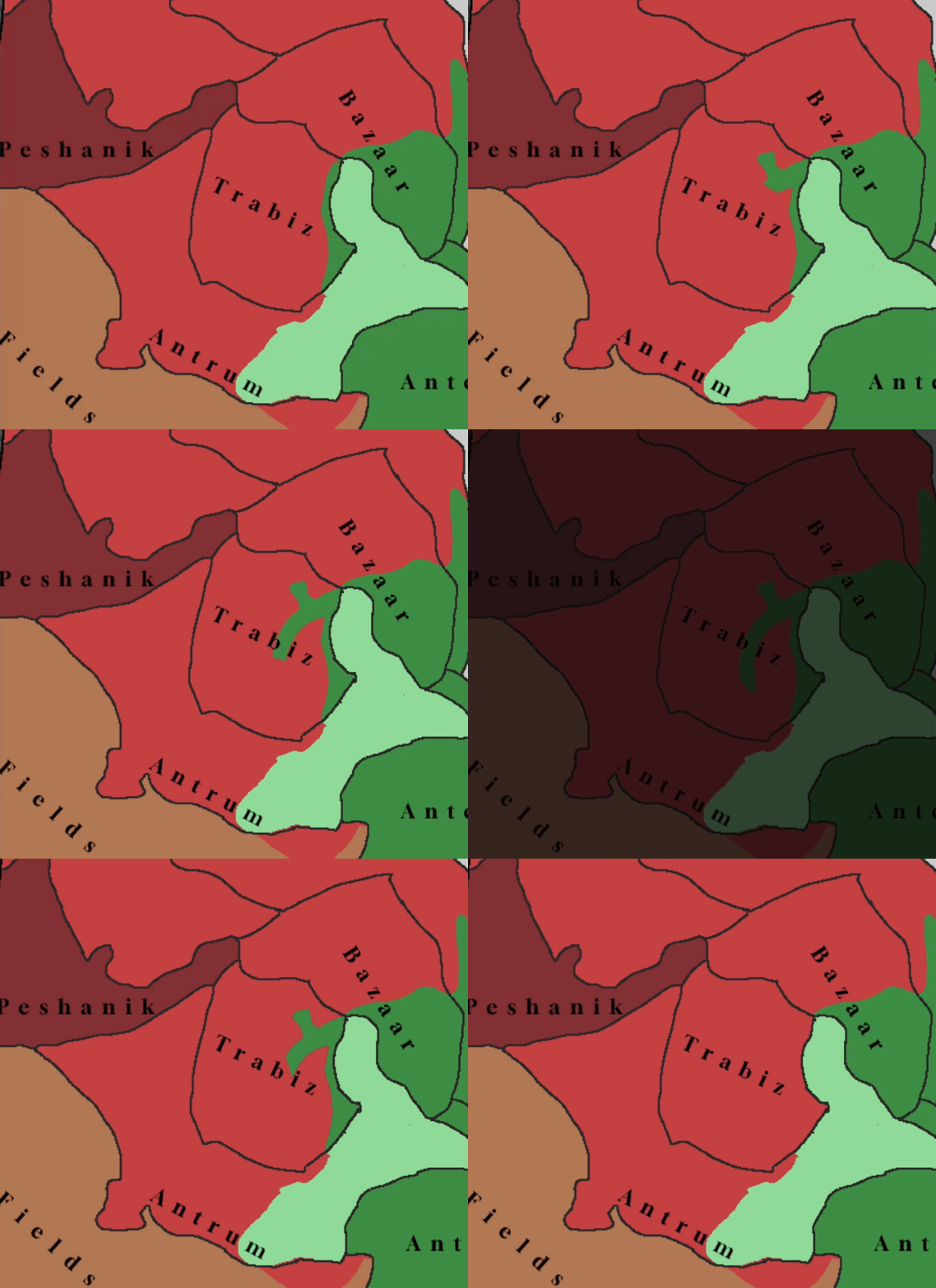
Battle map of the Second Battle of Antelope
Body camera footage provided by Army Director Bryant Martin shows the events that turned out to be the Second Battle of Antelope.
As early as 0400 hours on the fourth day of the battle, the 1st Infantry were basically boxed into a difficult position. Having isolated their food supplies, the 3rd Volunteer Militia had managed to break the chain of supplies linking them to the Fields of Plenty, forcing the Republic’s elite infantry into relying on local reserves. Their aim was clear: hold out until the 1st Infantry either gave up due to starvation or fell from exhaustion. However, it soon became obvious that the 1st Infantry were not about to let themselves be penned in by the Caravan. Rather, in one bold maneuver completely beyond Caravan expectations, they launched an intense counter-offensive straight against the Militia’s own interior flank.
Despite giving the 1st Infantry an escape route, the Trabiz Breakout signalled the halt of the Republic’s advance to the east. True, they managed to drive the 3rd Volunteer Militia out of the immediate area, but they had no choice but to abandon their tactical advantage – control of the Antrum hills. In the end, they found themselves in a narrow passage, while the Caravan’s militia withdrew into the surrounding greenery.
Rise of the PMJSRC
Summary: On May 1, 2026, as the principal state of the Caravan found itself crumbling under the pressures of the Republic, the Provisional Military Junta of the Soviet Republic of Caravan (PMJSRC) was formed in the Fields of Plenty. It can be compared to an emergence of a “Wehrmacht-style” regime in one of those regions that survived as a relic after its collapse. There were no soldiers enough for launching another offensive, yet it had active fighters, who viewed the war as a matter of revenge and survival.
The PMJSRC did not attempt to undertake any spectacular actions. Instead, it became the state of aid to its weak partner in the war. Having enlisted all its veterans, along with whatever stocks remained within the state’s boundaries, the new state supplied them directly to its ally as reinforcements. Thus, the Fields of Plenty became a strong point of supplies for the remaining Caravan forces. Through becoming the aid-state, the PMJSRC prolonged the war, giving rise to serious problems for the Republic of Baüme: it now had to cope with a disciplined military government in the vicinity of its conquest zones.
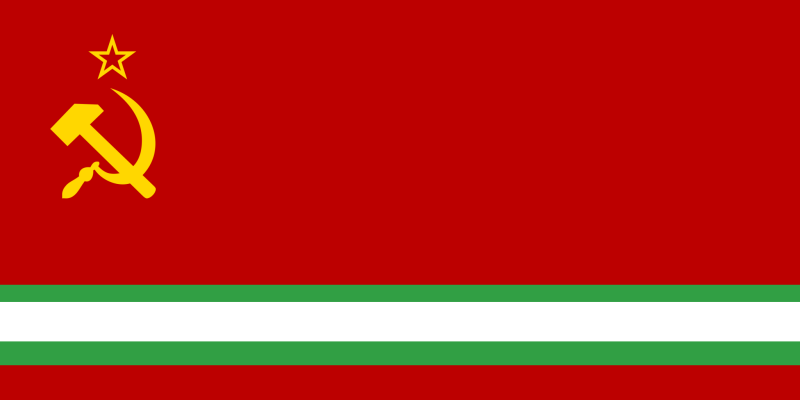

Battle of Skywalker
(May 2, 2026 - May 4, 2026)
On May 2nd, which was also the Army Director Bryant Martin's birthday the Republic of Baüme started the final push into Caravan. Although the strategic forecast was grim for Martin and the division was essentially trapped, Bryant Martin still decided to use the celebration of his birthday for approval and initiation of the Skywalker offensive. Unlike the traditional withdrawal strategy, this offensive included a swift and intensive operation against the Caravan's inner flank and thus changed the stance of Director Bryant Martin's division from the defensive to the ready-to-attack one. The latter would be tested just the next day when the Caravan High Command resorted to non-conventional psychological trickery tactics by sending the 2nd Volunteer Militia. Primarily consisting of women soldiers, this militia was supposed to approach the Republic's forward detachments to execute "Seduction Gambit" to make the sentries of the 1st Infantry lax and thus allow a soft breach into the Republic's territory. Nevertheless, the 1st Infantry proved to be professional enough to prevent the psychological manipulation and keep the engagement standards in effect that left the Caravan's forward units dangerously vulnerable to the ensuing assault.
On the fourth day of the offensive, the Republic fully engaged in what was later called "Trabiz Breakout". Instead of the expected race for the northern way of escape, the 1st Infantry decided to attack the enemy head-on and occupy the territory where the Caravan was stationed. Through the use of artillery, the southern Bazaar was reclaimed within a few hours, destroying the supply line of the Caravan. As a result, the Republic forces could push the enemy further north at an unprecedented pace, as observers compared their progress to a "red tide," which forced the 3rd Volunteer Militia to leave the Antrum heights and return via the muddy terrain to the southeast. Thus, the "Push to Hell and Back" brought the control over Antrum hills and southern Bazaar back to the Republic troops leaving the remaining parts of the ASR surrounded in the faraway areas of the Antelope region. Eventually, the Republic gained full control over the eastern frontier, restored its supply lines to the Fields of Plenty, and secured the triumph for the forces led by Director Bryant Martin.

Map of the Battle of Skywalker
Battle of Caravan
(May 7, 2026 - May 9, 2026)
The Battle of Caravan, alternatively documented as the Fall of Caravan, stands as the decisive concluding engagement of the Caravan ASR conflict. Though contemporary historians often debate whether it qualifies as a "battle" given the asymmetrical nature of the combat, the events of May 7, 2026, fundamentally restructured the regional corridor. At 16:00, a combined arms force comprising the 1st Infantry Division, the 3rd Motorized Division, and the elite 2nd "Hell Patrol" Special Forces initiated a multi-axis penetration into the urban center. The Republic of Baüme’s High Command eschewed a rapid kinetic assault in favor of a "rolling annexation" strategy, prioritizing the establishment of fortified supply corridors and the systematic integration of municipal infrastructure as they advanced.

The battle of Caravan animated map

The flag of the Holy See, also known as the Vatican City, flies alongside the Light of Baüme (old variation) or the flag of the Republic of Baüme shortly after the victory (May 9, 2026).

Flag of the Armed Forces of the Caravan Autonomous Soviet Republic, later adopted to the Provisional Military Junta of the Soviet Republic of Caravans official flag, right outside the gates to Caravan (May 8, 2026).
Opposition was primarily centered around the 3rd Volunteer Militia, a force largely composed of local irregulars and remnants of the ASR’s civil defense. While the militia attempted to leverage the city’s dense architecture to stall the Republic’s momentum, they lacked the anti-armor capabilities to check the 3rd Motorized Division effectively. For the defenders, the engagement was defined by a desperate, localized attrition; for the Republic’s rank-and-file, it was a methodical execution of superior logistics. Infantrymen moved house-to-house (small stick forts) not with the intent of total destruction, but with the calculated goal of securing a functioning city, often engaging in tense, close-quarters negotiations for surrender to avoid unnecessary damage to what was already being viewed as Republic property.
By the evening hours, the tactical phase transitioned into a comprehensive administrative takeover. The resistance offered by the 3rd Militia collapsed as the "Hell Patrol" successfully decapitated the local command-and-control nodes, leaving the defenders isolated and without a cohesive objective. This shift was marked by the immediate implementation of the Caravan-Baüme Dependency protocols. As the Republic’s flag was hoisted over the central administrative district, the legal status of the territory shifted from an enemy combatant zone to a colonial dependency. The battle concluded not with a formal surrender on the field, but with the integration of Caravan into the Republic’s economic and military framework, ending the ASR’s sovereignty in exchange for a fragile, imposed stability.
Treaty of Bernards:
(May 15, 2026)
The Treaty of Bernards permanently concluded the hostilities between the Republic of Baüme and the Caravan Autonomous Soviet Socialist Republic (ASR). High-ranking officials from both factions finalized the historic accord. Representing the victorious Republic of Baüme were Second Chair President Aiden McLain and Bryant Martin, Director of the Armed Forces. They signed the document alongside Caravan Communist Party Chairman Jason Jonathan.
The signing of the treaty effectively marked the total dissolution of the Autonomous Soviet Republic of Caravan. Under the strict terms of the capitulation, the Republic of Baüme completely disarmed the defeated nation, seizing the entirety of the Caravan military apparatus and assets. However, in an act of strategic diplomacy, Baüme chose not to annex the remaining sovereign territory, nor did they permit the communist regime to retain power over the land. Instead, Baüme facilitated the repatriation of all prisoners of war and returned full territorial sovereignty directly to the civilian population of Caravan.
Aftermath of Caravan
Directly following the end of the Caravan Autonomous Soviet Socialist Republic (ASR), the Republic of Baüme withdrew all military personnel from the former ASR, allowing multiple factions to operate independently. For many of them, they would not last very long, such as the Dynasty of Antelope, which lasted under 12 hours. The Provisional Military Junta of the Soviet Republic of Caravan attempted to unite its fractured brothers and succeeded. The Provisional Military Junta of the Soviet Republic of Caravan united the Caravan Soviet Socialist Republic and the Kingdom of Zeron in a final attempt to restore the Caravan ASR.

Dynasty of Antelope

Kingdom of Zeron

Caravan Republic
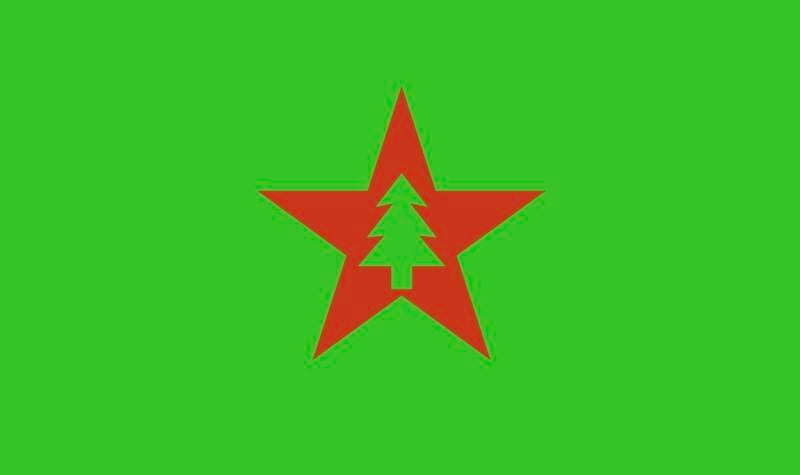
Caravan SSR
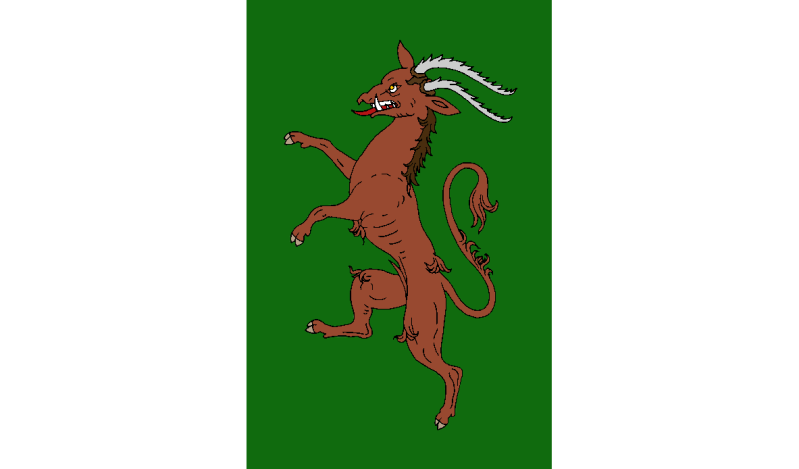
Kingdom of Caravan

Baazar Kingdom
*All recorded documentation has been held by the NWPB, who assume all information is correct. No Federal or Local laws within the United States were broken or abused and no one was seriously injured.
Create Your Own Website With Webador